Showing posts with label Uighurs. Show all posts

Monday, April 27, 2009

China | Xinjiang | Dragon Fighter

Rebiya Kadeer

There is a new book out about Rebiya Kadeer, from Urumqi, in Xinjiang Province, who was once reputed to be the richest women in China and was later arrested and thrown into prison on what was widely considered to be trumped-up charges. (Among other suspicious activities, she once met with evil Microsoft potentate Bill “666” Gates.) See Dragon Fighter: One Woman's Epic Struggle for Peace with China.

Despite being persona non grata in China her name is still displayed on the front of one of the department stores she owned in Urumqi (in Uighur Arabic Script). Interestingly, the Uighurs originated in Mongolia—the ruins of their Old Capital City can still be seen in Arkhangai Aimag, north of Kharkhorin. And of course, the Mongolian Vertical Script is based on the old Uighur Vertical Script . . .

Tuesday, December 23, 2008

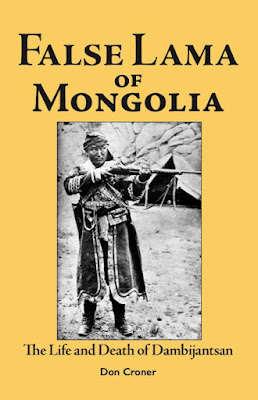
Mongolia | Life & Death of Dambijantsan, the False Lama

Who was Dambijantsan?

A Buddhist monk; a freedom fighter for Mongolian independence; the descendant of Amursanaa (1723–1757), the Western Mongol who led the last great uprising against the Qing Dynasty of China; the incarnation of Mahakala, the Buddhist god of war; bandit, torturer, murderer, or evil incarnate? During his lifetime no one was sure who he really was, and even today the controversy about his life continues.

Born in what is now the Republic of Kalmykia, part of the Russian Federation, Dambijantsen traveled throughout Tibet, India, and China before arriving in Mongolia in 1890 where he tossed gold coins to bystanders and announced to one and all that he had come to free Mongolia from the yoke of the Qing Dynasty of China. After disappearing almost twenty years he returned to lead the attack on Khovd City, the last Chinese outpost in Mongolia. Honored by the Eighth Bogd Gegeen, the theocratic leader of Mongolia, for his efforts in achieving Mongolian independence, he went on to establish his own mini-state in western Mongolia, which he hoped to use as a base for establishing a Mongol-led Buddhist khanate in Inner Asia. His dictatorial nature and unbridled sadism soon came to the fore and he was finally arrested and imprisoned in Russia. After the Russian Revolution he returned to Mongolia, gathered new followers around him, and established a stronghold at the nexus of old caravan routes in Gansu Province, China. He robbed caravans, grew opium, and once again dreamed of creating a new Mongolian khanate in Inner Asia. Finally the new Bolshevik government in Mongolia, fearful of his rising power, issued orders for his assassination. Dambijantsan died in 1922, but in Mongolia legends persist to this day that his spirit still rides on the wind of the Gobi and continues to haunt his former lairs.


For more on Dambijantsan see False Lama of Mongolia: The Life and Death of Dambijantsan.