Monday, October 25, 2021

Mongolia | Tibet | Diluv Khutagt | Dambijantsan’s Tibet Scam

Who was Dambijantsan?

A Buddhist monk; a freedom fighter for Mongolian independence; the descendant of Amursanaa (1723–1757), the Western Mongol who led the last great uprising against the Qing Dynasty of China; the incarnation of Mahakala, the Buddhist god of war; bandit, torturer, murderer, or evil incarnate? During his lifetime no one was sure who he really was, and even today the controversy about his life continues.

Born in what is now the Republic of Kalmykia, part of the Russian Federation, Dambijantsen traveled throughout Tibet, India, and China before arriving in Mongolia in 1890 where he tossed gold coins to bystanders and announced to one and all that he had come to free Mongolia from the yoke of the Qing Dynasty of China. After disappearing almost twenty years he returned to lead the attack on Khovd City, the last Chinese outpost in Mongolia. Honored by the Eighth Bogd Gegeen, the theocratic leader of Mongolia, for his efforts in achieving Mongolian independence, he went on to establish his own mini-state in western Mongolia, which he hoped to use as a base for establishing a Mongol-led Buddhist khanate in Inner Asia. His dictatorial nature and unbridled sadism soon came to the fore and he was finally arrested and imprisoned in Russia. After the Russian Revolution he returned to Mongolia, gathered new followers around him, and established a stronghold at the nexus of old caravan routes in Gansu Province, China. He robbed caravans, grew opium, and once again dreamed of creating a new Mongolian khanate in Inner Asia. Finally the new Bolshevik government in Mongolia, fearful of his rising power, issued orders for his assassination. Dambijantsan died in 1922, but in Mongolia legends persist to this day that his spirit still rides on the wind of the Gobi and continues to haunt his former lairs.
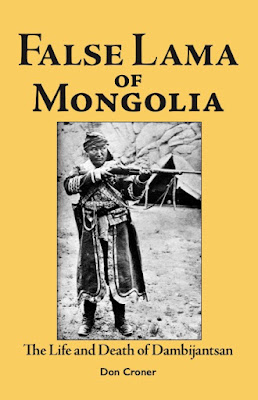

For more on Dambijantsan see False Lama of Mongolia: The Life and Death of Dambijantsan


Mongolia | Life & Death of the Ja Lama #18

Who was Dambijantsan?

A Buddhist monk; a freedom fighter for Mongolian independence; the descendant of Amursanaa (1723–1757), the Western Mongol who led the last great uprising against the Qing Dynasty of China; the incarnation of Mahakala, the Buddhist god of war; bandit, torturer, murderer, or evil incarnate? During his lifetime no one was sure who he really was, and even today the controversy about his life continues.

Born in what is now the Republic of Kalmykia, part of the Russian Federation, Dambijantsen traveled throughout Tibet, India, and China before arriving in Mongolia in 1890 where he tossed gold coins to bystanders and announced to one and all that he had come to free Mongolia from the yoke of the Qing Dynasty of China. After disappearing almost twenty years he returned to lead the attack on Khovd City, the last Chinese outpost in Mongolia. Honored by the Eighth Bogd Gegeen, the theocratic leader of Mongolia, for his efforts in achieving Mongolian independence, he went on to establish his own mini-state in western Mongolia, which he hoped to use as a base for establishing a Mongol-led Buddhist khanate in Inner Asia. His dictatorial nature and unbridled sadism soon came to the fore and he was finally arrested and imprisoned in Russia. After the Russian Revolution he returned to Mongolia, gathered new followers around him, and established a stronghold at the nexus of old caravan routes in Gansu Province, China. He robbed caravans, grew opium, and once again dreamed of creating a new Mongolian khanate in Inner Asia. Finally the new Bolshevik government in Mongolia, fearful of his rising power, issued orders for his assassination. Dambijantsan died in 1922, but in Mongolia legends persist to this day that his spirit still rides on the wind of the Gobi and continues to haunt his former lairs.


For more on Dambijantsan see False Lama of Mongolia: The Life and Death of Dambijantsan


Mongolia | Life of Ja Lama | Chapter 2

Who was Dambijantsan?

A Buddhist monk; a freedom fighter for Mongolian independence; the descendant of Amursanaa (1723–1757), the Western Mongol who led the last great uprising against the Qing Dynasty of China; the incarnation of Mahakala, the Buddhist god of war; bandit, torturer, murderer, or evil incarnate? During his lifetime no one was sure who he really was, and even today the controversy about his life continues.

Born in what is now the Republic of Kalmykia, part of the Russian Federation, Dambijantsen traveled throughout Tibet, India, and China before arriving in Mongolia in 1890 where he tossed gold coins to bystanders and announced to one and all that he had come to free Mongolia from the yoke of the Qing Dynasty of China. After disappearing almost twenty years he returned to lead the attack on Khovd City, the last Chinese outpost in Mongolia. Honored by the Eighth Bogd Gegeen, the theocratic leader of Mongolia, for his efforts in achieving Mongolian independence, he went on to establish his own mini-state in western Mongolia, which he hoped to use as a base for establishing a Mongol-led Buddhist khanate in Inner Asia. His dictatorial nature and unbridled sadism soon came to the fore and he was finally arrested and imprisoned in Russia. After the Russian Revolution he returned to Mongolia, gathered new followers around him, and established a stronghold at the nexus of old caravan routes in Gansu Province, China. He robbed caravans, grew opium, and once again dreamed of creating a new Mongolian khanate in Inner Asia. Finally the new Bolshevik government in Mongolia, fearful of his rising power, issued orders for his assassination. Dambijantsan died in 1922, but in Mongolia legends persist to this day that his spirit still rides on the wind of the Gobi and continues to haunt his former lairs.


For more on Dambijantsan see False Lama of Mongolia: The Life and Death of Dambijantsan


Sunday, October 24, 2021

Mongolia | Life of Ja Lama | Who Are the Kalymks?

Who was Dambijantsan?

A Buddhist monk; a freedom fighter for Mongolian independence; the descendant of Amursanaa (1723–1757), the Western Mongol who led the last great uprising against the Qing Dynasty of China; the incarnation of Mahakala, the Buddhist god of war; bandit, torturer, murderer, or evil incarnate? During his lifetime no one was sure who he really was, and even today the controversy about his life continues.

Born in what is now the Republic of Kalmykia, part of the Russian Federation, Dambijantsen traveled throughout Tibet, India, and China before arriving in Mongolia in 1890 where he tossed gold coins to bystanders and announced to one and all that he had come to free Mongolia from the yoke of the Qing Dynasty of China. After disappearing almost twenty years he returned to lead the attack on Khovd City, the last Chinese outpost in Mongolia. Honored by the Eighth Bogd Gegeen, the theocratic leader of Mongolia, for his efforts in achieving Mongolian independence, he went on to establish his own mini-state in western Mongolia, which he hoped to use as a base for establishing a Mongol-led Buddhist khanate in Inner Asia. His dictatorial nature and unbridled sadism soon came to the fore and he was finally arrested and imprisoned in Russia. After the Russian Revolution he returned to Mongolia, gathered new followers around him, and established a stronghold at the nexus of old caravan routes in Gansu Province, China. He robbed caravans, grew opium, and once again dreamed of creating a new Mongolian khanate in Inner Asia. Finally the new Bolshevik government in Mongolia, fearful of his rising power, issued orders for his assassination. Dambijantsan died in 1922, but in Mongolia legends persist to this day that his spirit still rides on the wind of the Gobi and continues to haunt his former lairs.


For more on Dambijantsan see False Lama of Mongolia: The Life and Death of Dambijantsan


Wednesday, October 24, 2012

China | Beijing | Ms. R’s Dumplings

On my first free evening in town Ms. R invited me to her apartment to sample her legendary dumplings.
Ms. R demonstrating her formidable cleaver skills
Ms. R preparing her fabled dumplings
Ms. R presiding over her dinner table. Dumplings on the left.
We were joined for dinner by Ms. W, a friend of Ms. R’s from Urumqi, in Xinjiang, the westernmost province of China and home of the Uighur people. Like many educated Uighurs Ms. W speaks almost perfect, unaccented English, even though she had never been to an English speaking country. Ms. R herself speaks Uighur, Uzbek, Chinese, English, and Spanish.
Ms R’s friend Ms. W
Ms. R and Ms W displaying sisterly affection
Over dinner we had a scintillating conversation, to say the least. After exhausting the subject of perfumes—Deep Six is now the scent of choice for Ms. R and her friends, I am told—we moved on to a discussion of Chagatai Turk, the language which was once spoken in the Chagatai Khanate. Chagatai was of course the second son of Chingis Khan and upon Chingis’s death he was awarded as his inheritance much of what is now Uzbekistan, Kazakstan, and Kyrgzstan, including the fabled cities of Bukhara and Samarkhand. The Chagatai Turk language developed about 1400 AD but is now considered extinct. One of the more notable literary productions in Chagatai Turk was Babur’s autobiography, the Baburnama.

Babur, who as you know founded the Moghul Empire in India, was the great-great-great grandson of Tamerlane: Sword of Islam, Conqueror of the World. Although not of royal blood himself, Tamurlane married Mulk-khanum, the daughter of Qaram, who was descended from Chagatai and thus from Chingis himself. Babur was apparently the fruit of this coupling, and thus a Chingisid-Chagataid himself, although given the fact that Tamurlane had dozens of wives the exact bloodlines must remain obscure. In addition to founding the Moghul Empire, Babur was a legendary party animal, as he fully recounts in his memoirs. When he wasn’t sacking cities he was getting high on wine and hashish and amusing himself with his considerable harem, with the occasional handsome young man thrown in for added titillation. Babur’s son Humayun became emperor of India in 1530. He died on January 19, 1556, after a fall on the steps of his library. Humayun’s Tomb can now be seen in New Delhi.

Saturday, March 13, 2010

Mongolia | Life of Dambijantsan | Among the Dörvöds

Mongolia | False Lama of Mongolia: The Life and Death of Dambijantsan 1

Who was Dambijantsan?

A Buddhist monk; a freedom fighter for Mongolian independence; the descendant of Amursanaa (1723–1757), the Western Mongol who led the last great uprising against the Qing Dynasty of China; the incarnation of Mahakala, the Buddhist god of war; bandit, torturer, murderer, or evil incarnate? During his lifetime no one was sure who he really was, and even today the controversy about his life continues.

Born in what is now the Republic of Kalmykia, part of the Russian Federation, Dambijantsen traveled throughout Tibet, India, and China before arriving in Mongolia in 1890 where he tossed gold coins to bystanders and announced to one and all that he had come to free Mongolia from the yoke of the Qing Dynasty of China. After disappearing almost twenty years he returned to lead the attack on Khovd City, the last Chinese outpost in Mongolia. Honored by the Eighth Bogd Gegeen, the theocratic leader of Mongolia, for his efforts in achieving Mongolian independence, he went on to establish his own mini-state in western Mongolia, which he hoped to use as a base for establishing a Mongol-led Buddhist khanate in Inner Asia. His dictatorial nature and unbridled sadism soon came to the fore and he was finally arrested and imprisoned in Russia. After the Russian Revolution he returned to Mongolia, gathered new followers around him, and established a stronghold at the nexus of old caravan routes in Gansu Province, China. He robbed caravans, grew opium, and once again dreamed of creating a new Mongolian khanate in Inner Asia. Finally the new Bolshevik government in Mongolia, fearful of his rising power, issued orders for his assassination. Dambijantsan died in 1922, but in Mongolia legends persist to this day that his spirit still rides on the wind of the Gobi and continues to haunt his former lairs.


For more on Dambijantsan see False Lama of Mongolia: The Life and Death of Dambijantsan


Wednesday, March 10, 2010

Mongolia | USA | Gunj and Friends

Just had an interesting video chat with International Adventuress Gunj and her friend Denise Zabalaga, a photo-journalist who has Worked in Afghanistan and many other places. They were in Gunj’s luxurious penthouse apartment near Union Square in downtown Manhattan, just a stone’s throw from the Strand Bookstore, and I was in my hovel in Zaisan Tolgoi. Talk about inequality! Anyhow, Denise related how she had been searching on the internet for information about Central Asia and came across my blog, which she had never seen before. Checking a few posts she was flabbergasted to see a photo of her friend, who we know of as Gunj, but who she knows of under a different alias. She contacted Gunj and confirmed that it was indeed her in the photos on my blog.  Now Denise was staying in Gunj’s apartment during a whirlwind visit to NYC and I was able to link up with both of them via video-chat. Small world! 
Gunj and Denise via Video-Chat

Sunday, March 7, 2010

Tibet | Mindroling | Dorje Drak

Wandered down to Tibet and visited Mindroling, the monastery which had been heavily damaged by the Zungarian Mongols who invaded Tibet in 1718 under the leadership of Tseveen Ravdan, the nephew of Galdan Bolshigt, who in the 1680s had led the Zungarian Mongols against the Khalkh Mongols, at that time headed by Zanabazar, the First Bogd Gegen of Mongolia, who was the great grandson of Avtai, the founder of Erdene Zuu. The Zungarians were hacked off that the Khoshot Mongol Khan Lhazang had effectively removed the 6th Dalai Lama from power and replaced him with what many Tibetans felt was a pretender 6th Dalai Lama. The Zungarians invaded Tibet with the idea of removing the pretender and installing Kalsang Gyatso, then a boy monk at Kumbum Monastery near current day Xining in Qinghai Province, China, as the Seventh Dalai Lama. As staunch supporters of the Dalai Lama’s Gelug sect they had a particular beef with the Nyingma sect and set about trashing and looting Nyingma monasteries. Thus Mindroling, a Nyingma stronghold, was heavily damaged. It was later rebuilt or at least refurbished using the distinctive local stone. Mindroling escaped destruction by the Red Guards during the Cultural Revolution of the 1960s and thus survives as an unusual example of the fine stone work used in early Tibetan monasteries.

Building at Mindroling showing distinctive stonework
From Mindroling we took the ferry across the Tsangpo (Brahmaputra) River.
Ferry across the Tsangpo
Passengers on the ferry
On the north side of the river we visited the tomb of Yeshe Tsogyel, the consort of Padmasambhava, who in the eight century had founded Samye Monastery.
Stupa of Yeshe Tsogyel

Then we continued on to the village of Dratang, where we spent New Year’s Eve and New Year’s Day at the Dratang Guest House, locally famous for its excellent dumpling soup.

Dratang Guest House
Then back across the Tsangpo by ferry and down the valley to yet another ferry across the Tsangpo to Dorje Drak Monastery.
Ferry to Dorje Drak
Dorje Drak
Like Mindroling, Dorje Drak was a Nyingma Monastery and was almost totally destroyed by the Zungarian Mongols in 1718. It was rebuilt, only to be destroyed again during the Cultural Revolution. It has now been rebuilt yet again.
Dorje Drak

We arrived just in time to see the completion of a sand mandala dedicated to Yama, the Lord of Death.


Sand Mandala
The monks conducted ceremonies connected with the mandala from about five to ten o’clock in the in the morning, then in the late afternoon they did a ceremonial dance in the courtyard, and then more chanting from about seven to ten in the evening.
Ceremonial Dance
We stayed in a guest room at the monastery and were very well treated by the monks, who plied us continually with butter tea.

Saturday, March 6, 2010

USA | Dalai Lama

It turns out that the Dalai Lama was not summoned to the White House to make a Solomonic judgment about the Paternity of Conan O’Brien’s Baby, as I previously believed. For an intriguing account of what did go down see How to Greet the Dalai Lama.
Dalai Lama leaving the White House. It’s a shame the White House doesn’t have a better garbage collection service.

Friday, March 5, 2010

Mongolia | Non-Human Origins of Dambijantsan

Who was Dambijantsan?

A Buddhist monk; a freedom fighter for Mongolian independence; the descendant of Amursanaa (1723–1757), the Western Mongol who led the last great uprising against the Qing Dynasty of China; the incarnation of Mahakala, the Buddhist god of war; bandit, torturer, murderer, or evil incarnate? During his lifetime no one was sure who he really was, and even today the controversy about his life continues.

Born in what is now the Republic of Kalmykia, part of the Russian Federation, Dambijantsen traveled throughout Tibet, India, and China before arriving in Mongolia in 1890 where he tossed gold coins to bystanders and announced to one and all that he had come to free Mongolia from the yoke of the Qing Dynasty of China. After disappearing almost twenty years he returned to lead the attack on Khovd City, the last Chinese outpost in Mongolia. Honored by the Eighth Bogd Gegeen, the theocratic leader of Mongolia, for his efforts in achieving Mongolian independence, he went on to establish his own mini-state in western Mongolia, which he hoped to use as a base for establishing a Mongol-led Buddhist khanate in Inner Asia. His dictatorial nature and unbridled sadism soon came to the fore and he was finally arrested and imprisoned in Russia. After the Russian Revolution he returned to Mongolia, gathered new followers around him, and established a stronghold at the nexus of old caravan routes in Gansu Province, China. He robbed caravans, grew opium, and once again dreamed of creating a new Mongolian khanate in Inner Asia. Finally the new Bolshevik government in Mongolia, fearful of his rising power, issued orders for his assassination. Dambijantsan died in 1922, but in Mongolia legends persist to this day that his spirit still rides on the wind of the Gobi and continues to haunt his former lairs.


For more on Dambijantsan see False Lama of Mongolia: The Life and Death of Dambijantsan


Mongolia | Zaisan Tolgoi | Ninth of the Nine Nines | Ерийн дулаан болно

The ninth and last of the Nine-Nines—nine periods of nine days each, each period marked by some description of winter weather—began on March 3. This last Nine is Ерийн дулаан болно: the time when warm weather starts, signaling the end of winter. We did have a warm spell, with temperatures up in the mid 20sºF / –6ºC in the afternoon, but this morning it was back down to Minus 30ºF / –34ºC and more cold weather is expected over the weekend. But in the afternoons my finely tuned olfactory organs detect a whiff of spring in the air, so we can start looking forward to the next big event in Zaisan Tolgoi, the Appearance of the First Wild Flower. 

And speaking of big events, in case you have not noticed the Earth Has Been Rocked Off Its Axis by the earthquake in Chile. This happens to coincide with the book I am now reading:


It cannot be said we are not living in exciting times!

Friday, February 26, 2010

Thursday, February 25, 2010

Mongolia | UFO Crash Lands

A UFO has Crashed near Ulaan Baatar:
Two objects reportedly crashed to the ground near Ulaan Baatar, the capital of Mongolia on Feb. 19, 2010. The first object, according to the report on the Mutual UFO Network (MUFON) Witness Database, weighed 10 kg, while the second larger object weighed approximately 2 tons. Other than that, there's not a lot of information available about the objects. But of course, UFOers are having a field day, calling the image, above, that accompanied the report a "leaked UFO crash" picture. But the object looks suspiciously like a rocket or jet engine, or perhaps a rocket nose cone. Objects that crash to Earth likely have a very terrestrial origin.  
Alien spaceship
or Mongolian “Balloon Boy” stunt gone awry?
One thing for sure: if this object, whatever its origins, had pancaked a ger or plowed into the side of an apartment building the results would not have been pretty. Keep in mind, too, that Unidentified Flying Objects are just that: objects moving through space which cannot readily be identified. That  does not necessarily mean that they are extraterrestrial.

Tuesday, February 23, 2010

USA | Latest News

I have a hard time following the news coming out of the States. I don’t watch television, so I have to rely totally on the internet. I don’t actually click on most of the stories, but just from the headlines I gather there have been a lot of problems recently. It seems that Tiger Woods and Conan O’Brien crashed a party at the White House and after a night together in the Lincoln Bedroom Conan O’Brien ended up pregnant. Then John Edwards came forward and claimed that he was actually the father of Conan O’Brien’s baby.  But then Jay Leno announced that he was in fact the father of Conan O’Brien’s baby and that they intended to get married and have a talk show together. And now Lady Gaga has come forth and proclaimed that the baby is a result of a threesome between herself, Tiger Woods, and Conan O’Brien but that she is the father of the baby, Woods having teed up at the wrong hole. The latest news is that Obama invited the Dalai Lama, the current incarnation of King Solomon, to the White House and asked him to make a judgment as to who is actually the father of the baby.  At least this is what I gather from the headlines. What a mess! I’m glad I live in Mongolia. The only problem here is that 2,000,000 Head of Livestock have died over the winter and thousands of families have been left destitute.

Sunday, February 21, 2010

Mongolia | Zaisan Tolgoi | Seventh of the Nine-Nines | Doviin Tolgoi Borlono

The seventh of the so-called Nine-Nines—nine periods of nine days each, each period marked by some description of winter weather—began on February 14, which coincidentally was the first day of the Male Iron Tiger Year here in Mongolia. The actual moment of the New Moon was 10:52 a.m. on the 14th, so according to some interpretations the New Year began then. The Seventh of the Nine-Nines is Doviin Tolgoi  Borlono, the “time when the tops of the hills become brown.” Around the beginning of the year it was still going down to the Minus 20sºF / –28sºC at night.  It has warmed up a bit since then but I have not actually seen any brown hilltops yet. Yesterday it got up to 18ºF / –7º C in the afternoon and I did see some puddles of water along the road where the sun was hitting hard—a precursor of the eighth of the Nine-Nines—the “time when puddles appear on the ground”—which begins on February 23. Expect some real changes in the weather around the Full Moon on March 1.

This should provide a bit of relief from the disastrous winter experienced in some parts of Mongolia. According to Some Accounts more than two million head of livestock have died already. The only good news is that some parts of the country seem to have escaped the worst of the winter onslaught. Recent visitors to Khamariin Khiid in Dornogov Aimag and Sukhebaatar Aimag report that livestock losses in those areas have been no worse than usual.

Wednesday, February 10, 2010

Mongolia | Sixth Nine-Nine | Zuraasan Zam Garna

The sixth of the so-called Nine-Nines—nine periods of nine days each, each period marked by some description of winter weather—began on February 5th. This is Zuraasan Zam Garnai, the Time When the Trail of the Road Appears. This description would seem to indicate a slight warming from the previous Nine-Nines, a time when well-traveled trails become free from ice and snow. Indeed, on the night before the first day of this Nine-Nine, the temperature did not get below 0ºF / –18ºC for probably the first time this year. We did, however, get three or more inches of snow here in Zaisan Tolgoi that night, along with extreme winds. Three of the windows in my hovel blew open during the night and the next morning I had little inch-high snow drifts on my wool carpets. Over 400 People Were Lost or Trapped in the snow storm. Since then temperatures have plunged, going down into the Minus 30sºF every night. So the trails have definitely not reappeared. And the Forecast for Tsagaan Sar, the Lunar New Year, on the 14th, is not much warmer. This has been a gruesome winter. Reportedly 1.8 million head of livestock have died so far, and the number is expected to rise significantly. Figures of 20 million have been tossed around, more than half of all livestock in Mongolia, but if this happens it might as well be the Apocalypse for Mongolia. As mentioned before, I am unable to leave Zaisan Tolgoi at the moment so I cannot report on what is going on in the countryside. There is a YouTube Video: Nomads Face Hunger Crisis.

Tuesday, February 2, 2010

Mongolia | Life of Ja Lama | Chapter 4 | Early Life

Who was Dambijantsan?

A Buddhist monk; a freedom fighter for Mongolian independence; the descendant of Amursanaa (1723–1757), the Western Mongol who led the last great uprising against the Qing Dynasty of China; the incarnation of Mahakala, the Buddhist god of war; bandit, torturer, murderer, or evil incarnate? During his lifetime no one was sure who he really was, and even today the controversy about his life continues.

Born in what is now the Republic of Kalmykia, part of the Russian Federation, Dambijantsen traveled throughout Tibet, India, and China before arriving in Mongolia in 1890 where he tossed gold coins to bystanders and announced to one and all that he had come to free Mongolia from the yoke of the Qing Dynasty of China. After disappearing almost twenty years he returned to lead the attack on Khovd City, the last Chinese outpost in Mongolia. Honored by the Eighth Bogd Gegeen, the theocratic leader of Mongolia, for his efforts in achieving Mongolian independence, he went on to establish his own mini-state in western Mongolia, which he hoped to use as a base for establishing a Mongol-led Buddhist khanate in Inner Asia. His dictatorial nature and unbridled sadism soon came to the fore and he was finally arrested and imprisoned in Russia. After the Russian Revolution he returned to Mongolia, gathered new followers around him, and established a stronghold at the nexus of old caravan routes in Gansu Province, China. He robbed caravans, grew opium, and once again dreamed of creating a new Mongolian khanate in Inner Asia. Finally the new Bolshevik government in Mongolia, fearful of his rising power, issued orders for his assassination. Dambijantsan died in 1922, but in Mongolia legends persist to this day that his spirit still rides on the wind of the Gobi and continues to haunt his former lairs.


For more on Dambijantsan see False Lama of Mongolia: The Life and Death of Dambijantsan


Monday, February 1, 2010

Mongolia | Ulaan Baatar | Lam Rim Temple

Wandered up to Lam Rim Monastery, on Zanabazar Street just below Gandan Monastery in Ulaan Baatar. I have gone here many times over the years but I never really knew the story behind the founding of this monastery. The other day I dropped to see Bayantsagaan, the director of the monastery, and by chance his daughter Erdenetsetseg was there. She lived in Malaysia for several years and speaks near perfect English, so with her help I was able to get some background information.
Erdenetsetseg
Lam Rim Monastery
Bayantsagaan
Lam Rim Monastery was founded in 1990 by Erdenetsetseg’s father S. Bayantsagaan. Originally from Khovd Aimag in western Mongolia, Bayantsagaan studied the Lam Rim Teaching and Buddhist philosophy at the Mongolian Academy of Sciences and the Zanabazar Institute in Ulaan Baatar. He has a Geshé degree from the Zanabazar Institute and is fluent in Tibetan. In the early 1990s he played an active role the democratic movement in Mongolia and for much of the 1990s he worked as the director of the Mongolian Believers Association. During this period about seventy monasteries and temples were activated under his leadership. He has also initiated and strengthened communications between Mongolia and Tibet and in recent years has organized visits of the Dalai Lama to Mongolia.

Lam Rim Monastery was founded to promote the Lam Rim Teaching of Tsongkhapa (Mongolian=Bogd Zonkhov), who in the fifteen-century founded the Gelug Sect in Tibet.
Bogd Zhonkov
Bogd Zhonkov is author of one of the primary Lam Rim texts, The Great Treatise on the Stages of the Path of Enlightenment. Bayantsagaan would like to emphasize that the Lam Rim, or Graduated Path, is not just for monks, but for all practitioners who wish to proceed on the path to Enlightenment. The three main Protectors of the monastery are Gombo, Namsrai, and Choijoo, three deities who have promised to protect Bogd Zonkhov’s teaching wherever it may be.
Interior of Lam Rim Temple
Ninety-six year old monk, the oldest at Lam Rim Monastery
Lama Gombo, a mere stripling at ninety-five years old
New Generation of monks at Lam Rim
Monks giving blessings
Lam Rim Monastery also specializes in the Kalachakra (Mongolian = Duinkhor) Teaching believed to have come from the Kingdom of Shambhala. Kalachakra ceremonies are performed here on the 10th and 25th day of the Lunar Month. One of the goals of the monastery is to prepare people for the eventually arrival of the 25th Kalkin King of Shambhala under whose reign Buddhism will flourish throughout the entire world.
Kingdom of Shambhala depicted on Thangka at Lam Rim Temple
One of the Thirty-Two Kings of Shambhala on display at Lam Rim Temple
Get your Free Lam Rim Temple Brochure Here.

Saturday, January 30, 2010

Mongolia | Zaisan Tolgoi | Wolf Moon

The Wolf Moon of Mid-Winter will be Supersized Tonight:
The 2010 Wolf Moon will appear 30 percent brighter and 14 percent larger than any other full moon this year, because our cosmic neighbor will actually be closer to Earth than usual. The moon will be at its closest perigee—the nearest it gets to our planet during its egg-shaped orbit—for 2010 at 4:04 a.m. ET Saturday, reaching a distance of 221,577 miles (356,593 kilometers) from Earth.
 
Wolf Moon Tonight! Beware of Earthquakes!
And as if that were not enough Mars will be Right Next to the Wolf Moon:
Look into the eastern sky about 7 p.m. Friday or 8 p.m. Saturday and you may ask, “What’s that bright, red star next to the full moon?” That’s no star, it’s the planet Mars, and it happens to be a mere 61.7 million miles from Earth, according to Jon U. Bell, director of the Hallstrom Planetarium at Indian River State College in Fort Pierce.  “That’s actually pretty close for Mars,” Bell said.
 Photo Courtesy of Sky&Telescope
I will be observing the Wolf Moon from Zaisan Tolgoi.
 
Zaisan Tolgoi. If you hear someone howling at the Moon it will probably be me.