Showing posts with label Ja Lama. Show all posts

Monday, October 25, 2021

Mongolia | Tibet | Diluv Khutagt | Dambijantsan’s Tibet Scam

Who was Dambijantsan?

A Buddhist monk; a freedom fighter for Mongolian independence; the descendant of Amursanaa (1723–1757), the Western Mongol who led the last great uprising against the Qing Dynasty of China; the incarnation of Mahakala, the Buddhist god of war; bandit, torturer, murderer, or evil incarnate? During his lifetime no one was sure who he really was, and even today the controversy about his life continues.

Born in what is now the Republic of Kalmykia, part of the Russian Federation, Dambijantsen traveled throughout Tibet, India, and China before arriving in Mongolia in 1890 where he tossed gold coins to bystanders and announced to one and all that he had come to free Mongolia from the yoke of the Qing Dynasty of China. After disappearing almost twenty years he returned to lead the attack on Khovd City, the last Chinese outpost in Mongolia. Honored by the Eighth Bogd Gegeen, the theocratic leader of Mongolia, for his efforts in achieving Mongolian independence, he went on to establish his own mini-state in western Mongolia, which he hoped to use as a base for establishing a Mongol-led Buddhist khanate in Inner Asia. His dictatorial nature and unbridled sadism soon came to the fore and he was finally arrested and imprisoned in Russia. After the Russian Revolution he returned to Mongolia, gathered new followers around him, and established a stronghold at the nexus of old caravan routes in Gansu Province, China. He robbed caravans, grew opium, and once again dreamed of creating a new Mongolian khanate in Inner Asia. Finally the new Bolshevik government in Mongolia, fearful of his rising power, issued orders for his assassination. Dambijantsan died in 1922, but in Mongolia legends persist to this day that his spirit still rides on the wind of the Gobi and continues to haunt his former lairs.


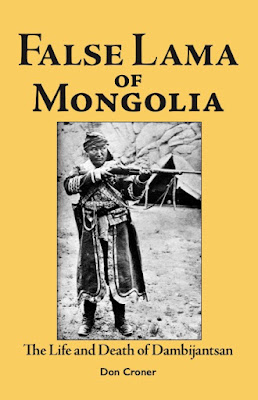
For more on Dambijantsan see False Lama of Mongolia: The Life and Death of Dambijantsan. 


Mongolia | Life & Death of the Ja Lama #18

Who was Dambijantsan?

A Buddhist monk; a freedom fighter for Mongolian independence; the descendant of Amursanaa (1723–1757), the Western Mongol who led the last great uprising against the Qing Dynasty of China; the incarnation of Mahakala, the Buddhist god of war; bandit, torturer, murderer, or evil incarnate? During his lifetime no one was sure who he really was, and even today the controversy about his life continues.

Born in what is now the Republic of Kalmykia, part of the Russian Federation, Dambijantsen traveled throughout Tibet, India, and China before arriving in Mongolia in 1890 where he tossed gold coins to bystanders and announced to one and all that he had come to free Mongolia from the yoke of the Qing Dynasty of China. After disappearing almost twenty years he returned to lead the attack on Khovd City, the last Chinese outpost in Mongolia. Honored by the Eighth Bogd Gegeen, the theocratic leader of Mongolia, for his efforts in achieving Mongolian independence, he went on to establish his own mini-state in western Mongolia, which he hoped to use as a base for establishing a Mongol-led Buddhist khanate in Inner Asia. His dictatorial nature and unbridled sadism soon came to the fore and he was finally arrested and imprisoned in Russia. After the Russian Revolution he returned to Mongolia, gathered new followers around him, and established a stronghold at the nexus of old caravan routes in Gansu Province, China. He robbed caravans, grew opium, and once again dreamed of creating a new Mongolian khanate in Inner Asia. Finally the new Bolshevik government in Mongolia, fearful of his rising power, issued orders for his assassination. Dambijantsan died in 1922, but in Mongolia legends persist to this day that his spirit still rides on the wind of the Gobi and continues to haunt his former lairs.


For more on Dambijantsan see False Lama of Mongolia: The Life and Death of Dambijantsan. 


Sunday, October 24, 2021

Mongolia | Life of Ja Lama | Who Are the Kalymks?

Who was Dambijantsan?

A Buddhist monk; a freedom fighter for Mongolian independence; the descendant of Amursanaa (1723–1757), the Western Mongol who led the last great uprising against the Qing Dynasty of China; the incarnation of Mahakala, the Buddhist god of war; bandit, torturer, murderer, or evil incarnate? During his lifetime no one was sure who he really was, and even today the controversy about his life continues.

Born in what is now the Republic of Kalmykia, part of the Russian Federation, Dambijantsen traveled throughout Tibet, India, and China before arriving in Mongolia in 1890 where he tossed gold coins to bystanders and announced to one and all that he had come to free Mongolia from the yoke of the Qing Dynasty of China. After disappearing almost twenty years he returned to lead the attack on Khovd City, the last Chinese outpost in Mongolia. Honored by the Eighth Bogd Gegeen, the theocratic leader of Mongolia, for his efforts in achieving Mongolian independence, he went on to establish his own mini-state in western Mongolia, which he hoped to use as a base for establishing a Mongol-led Buddhist khanate in Inner Asia. His dictatorial nature and unbridled sadism soon came to the fore and he was finally arrested and imprisoned in Russia. After the Russian Revolution he returned to Mongolia, gathered new followers around him, and established a stronghold at the nexus of old caravan routes in Gansu Province, China. He robbed caravans, grew opium, and once again dreamed of creating a new Mongolian khanate in Inner Asia. Finally the new Bolshevik government in Mongolia, fearful of his rising power, issued orders for his assassination. Dambijantsan died in 1922, but in Mongolia legends persist to this day that his spirit still rides on the wind of the Gobi and continues to haunt his former lairs.


For more on Dambijantsan see False Lama of Mongolia: The Life and Death of Dambijantsan. 


Saturday, March 13, 2010

Mongolia | Life of Dambijantsan | Among the Dörvöds

Mongolia | False Lama of Mongolia: The Life and Death of Dambijantsan 1

Who was Dambijantsan?

A Buddhist monk; a freedom fighter for Mongolian independence; the descendant of Amursanaa (1723–1757), the Western Mongol who led the last great uprising against the Qing Dynasty of China; the incarnation of Mahakala, the Buddhist god of war; bandit, torturer, murderer, or evil incarnate? During his lifetime no one was sure who he really was, and even today the controversy about his life continues.

Born in what is now the Republic of Kalmykia, part of the Russian Federation, Dambijantsen traveled throughout Tibet, India, and China before arriving in Mongolia in 1890 where he tossed gold coins to bystanders and announced to one and all that he had come to free Mongolia from the yoke of the Qing Dynasty of China. After disappearing almost twenty years he returned to lead the attack on Khovd City, the last Chinese outpost in Mongolia. Honored by the Eighth Bogd Gegeen, the theocratic leader of Mongolia, for his efforts in achieving Mongolian independence, he went on to establish his own mini-state in western Mongolia, which he hoped to use as a base for establishing a Mongol-led Buddhist khanate in Inner Asia. His dictatorial nature and unbridled sadism soon came to the fore and he was finally arrested and imprisoned in Russia. After the Russian Revolution he returned to Mongolia, gathered new followers around him, and established a stronghold at the nexus of old caravan routes in Gansu Province, China. He robbed caravans, grew opium, and once again dreamed of creating a new Mongolian khanate in Inner Asia. Finally the new Bolshevik government in Mongolia, fearful of his rising power, issued orders for his assassination. Dambijantsan died in 1922, but in Mongolia legends persist to this day that his spirit still rides on the wind of the Gobi and continues to haunt his former lairs.


For more on Dambijantsan see False Lama of Mongolia: The Life and Death of Dambijantsan. 


Friday, March 5, 2010

Mongolia | Non-Human Origins of Dambijantsan

Who was Dambijantsan?

A Buddhist monk; a freedom fighter for Mongolian independence; the descendant of Amursanaa (1723–1757), the Western Mongol who led the last great uprising against the Qing Dynasty of China; the incarnation of Mahakala, the Buddhist god of war; bandit, torturer, murderer, or evil incarnate? During his lifetime no one was sure who he really was, and even today the controversy about his life continues.

Born in what is now the Republic of Kalmykia, part of the Russian Federation, Dambijantsen traveled throughout Tibet, India, and China before arriving in Mongolia in 1890 where he tossed gold coins to bystanders and announced to one and all that he had come to free Mongolia from the yoke of the Qing Dynasty of China. After disappearing almost twenty years he returned to lead the attack on Khovd City, the last Chinese outpost in Mongolia. Honored by the Eighth Bogd Gegeen, the theocratic leader of Mongolia, for his efforts in achieving Mongolian independence, he went on to establish his own mini-state in western Mongolia, which he hoped to use as a base for establishing a Mongol-led Buddhist khanate in Inner Asia. His dictatorial nature and unbridled sadism soon came to the fore and he was finally arrested and imprisoned in Russia. After the Russian Revolution he returned to Mongolia, gathered new followers around him, and established a stronghold at the nexus of old caravan routes in Gansu Province, China. He robbed caravans, grew opium, and once again dreamed of creating a new Mongolian khanate in Inner Asia. Finally the new Bolshevik government in Mongolia, fearful of his rising power, issued orders for his assassination. Dambijantsan died in 1922, but in Mongolia legends persist to this day that his spirit still rides on the wind of the Gobi and continues to haunt his former lairs.


For more on Dambijantsan see False Lama of Mongolia: The Life and Death of Dambijantsan. 


Friday, February 26, 2010

Tuesday, February 2, 2010

Mongolia | Life of Ja Lama | Chapter 4 | Early Life

Who was Dambijantsan?

A Buddhist monk; a freedom fighter for Mongolian independence; the descendant of Amursanaa (1723–1757), the Western Mongol who led the last great uprising against the Qing Dynasty of China; the incarnation of Mahakala, the Buddhist god of war; bandit, torturer, murderer, or evil incarnate? During his lifetime no one was sure who he really was, and even today the controversy about his life continues.

Born in what is now the Republic of Kalmykia, part of the Russian Federation, Dambijantsen traveled throughout Tibet, India, and China before arriving in Mongolia in 1890 where he tossed gold coins to bystanders and announced to one and all that he had come to free Mongolia from the yoke of the Qing Dynasty of China. After disappearing almost twenty years he returned to lead the attack on Khovd City, the last Chinese outpost in Mongolia. Honored by the Eighth Bogd Gegeen, the theocratic leader of Mongolia, for his efforts in achieving Mongolian independence, he went on to establish his own mini-state in western Mongolia, which he hoped to use as a base for establishing a Mongol-led Buddhist khanate in Inner Asia. His dictatorial nature and unbridled sadism soon came to the fore and he was finally arrested and imprisoned in Russia. After the Russian Revolution he returned to Mongolia, gathered new followers around him, and established a stronghold at the nexus of old caravan routes in Gansu Province, China. He robbed caravans, grew opium, and once again dreamed of creating a new Mongolian khanate in Inner Asia. Finally the new Bolshevik government in Mongolia, fearful of his rising power, issued orders for his assassination. Dambijantsan died in 1922, but in Mongolia legends persist to this day that his spirit still rides on the wind of the Gobi and continues to haunt his former lairs.


For more on Dambijantsan see False Lama of Mongolia: The Life and Death of Dambijantsan. 


Thursday, January 28, 2010

Mongolia | Life and Death of the Ja Lama | Chapter 9

Who was Dambijantsan?

A Buddhist monk; a freedom fighter for Mongolian independence; the descendant of Amursanaa (1723–1757), the Western Mongol who led the last great uprising against the Qing Dynasty of China; the incarnation of Mahakala, the Buddhist god of war; bandit, torturer, murderer, or evil incarnate? During his lifetime no one was sure who he really was, and even today the controversy about his life continues.

Born in what is now the Republic of Kalmykia, part of the Russian Federation, Dambijantsen traveled throughout Tibet, India, and China before arriving in Mongolia in 1890 where he tossed gold coins to bystanders and announced to one and all that he had come to free Mongolia from the yoke of the Qing Dynasty of China. After disappearing almost twenty years he returned to lead the attack on Khovd City, the last Chinese outpost in Mongolia. Honored by the Eighth Bogd Gegeen, the theocratic leader of Mongolia, for his efforts in achieving Mongolian independence, he went on to establish his own mini-state in western Mongolia, which he hoped to use as a base for establishing a Mongol-led Buddhist khanate in Inner Asia. His dictatorial nature and unbridled sadism soon came to the fore and he was finally arrested and imprisoned in Russia. After the Russian Revolution he returned to Mongolia, gathered new followers around him, and established a stronghold at the nexus of old caravan routes in Gansu Province, China. He robbed caravans, grew opium, and once again dreamed of creating a new Mongolian khanate in Inner Asia. Finally the new Bolshevik government in Mongolia, fearful of his rising power, issued orders for his assassination. Dambijantsan died in 1922, but in Mongolia legends persist to this day that his spirit still rides on the wind of the Gobi and continues to haunt his former lairs.


For more on Dambijantsan see False Lama of Mongolia: The Life and Death of Dambijantsan. 


Saturday, December 5, 2009

Mongolia | Khovd Aimag | Dambijantsan | Khoit Tsenkher Cave

Who was Dambijantsan?

A Buddhist monk; a freedom fighter for Mongolian independence; the descendant of Amursanaa (1723–1757), the Western Mongol who led the last great uprising against the Qing Dynasty of China; the incarnation of Mahakala, the Buddhist god of war; bandit, torturer, murderer, or evil incarnate? During his lifetime no one was sure who he really was, and even today the controversy about his life continues.

Born in what is now the Republic of Kalmykia, part of the Russian Federation, Dambijantsen traveled throughout Tibet, India, and China before arriving in Mongolia in 1890 where he tossed gold coins to bystanders and announced to one and all that he had come to free Mongolia from the yoke of the Qing Dynasty of China. After disappearing almost twenty years he returned to lead the attack on Khovd City, the last Chinese outpost in Mongolia. Honored by the Eighth Bogd Gegeen, the theocratic leader of Mongolia, for his efforts in achieving Mongolian independence, he went on to establish his own mini-state in western Mongolia, which he hoped to use as a base for establishing a Mongol-led Buddhist khanate in Inner Asia. His dictatorial nature and unbridled sadism soon came to the fore and he was finally arrested and imprisoned in Russia. After the Russian Revolution he returned to Mongolia, gathered new followers around him, and established a stronghold at the nexus of old caravan routes in Gansu Province, China. He robbed caravans, grew opium, and once again dreamed of creating a new Mongolian khanate in Inner Asia. Finally the new Bolshevik government in Mongolia, fearful of his rising power, issued orders for his assassination. Dambijantsan died in 1922, but in Mongolia legends persist to this day that his spirit still rides on the wind of the Gobi and continues to haunt his former lairs.


For more on Dambijantsan see False Lama of Mongolia: The Life and Death of Dambijantsan. 


Friday, December 4, 2009

Mongolia | Khovd Aimag | Dambijantsan’s Winter Camp

Who was Dambijantsan?

A Buddhist monk; a freedom fighter for Mongolian independence; the descendant of Amursanaa (1723–1757), the Western Mongol who led the last great uprising against the Qing Dynasty of China; the incarnation of Mahakala, the Buddhist god of war; bandit, torturer, murderer, or evil incarnate? During his lifetime no one was sure who he really was, and even today the controversy about his life continues.

Born in what is now the Republic of Kalmykia, part of the Russian Federation, Dambijantsen traveled throughout Tibet, India, and China before arriving in Mongolia in 1890 where he tossed gold coins to bystanders and announced to one and all that he had come to free Mongolia from the yoke of the Qing Dynasty of China. After disappearing almost twenty years he returned to lead the attack on Khovd City, the last Chinese outpost in Mongolia. Honored by the Eighth Bogd Gegeen, the theocratic leader of Mongolia, for his efforts in achieving Mongolian independence, he went on to establish his own mini-state in western Mongolia, which he hoped to use as a base for establishing a Mongol-led Buddhist khanate in Inner Asia. His dictatorial nature and unbridled sadism soon came to the fore and he was finally arrested and imprisoned in Russia. After the Russian Revolution he returned to Mongolia, gathered new followers around him, and established a stronghold at the nexus of old caravan routes in Gansu Province, China. He robbed caravans, grew opium, and once again dreamed of creating a new Mongolian khanate in Inner Asia. Finally the new Bolshevik government in Mongolia, fearful of his rising power, issued orders for his assassination. Dambijantsan died in 1922, but in Mongolia legends persist to this day that his spirit still rides on the wind of the Gobi and continues to haunt his former lairs.


For more on Dambijantsan see False Lama of Mongolia: The Life and Death of Dambijantsan. 


Sunday, November 22, 2009

Mongolia | Life and Death of Ja Lama | Chapter 2

Who was Dambijantsan?

A Buddhist monk; a freedom fighter for Mongolian independence; the descendant of Amursanaa (1723–1757), the Western Mongol who led the last great uprising against the Qing Dynasty of China; the incarnation of Mahakala, the Buddhist god of war; bandit, torturer, murderer, or evil incarnate? During his lifetime no one was sure who he really was, and even today the controversy about his life continues.

Born in what is now the Republic of Kalmykia, part of the Russian Federation, Dambijantsen traveled throughout Tibet, India, and China before arriving in Mongolia in 1890 where he tossed gold coins to bystanders and announced to one and all that he had come to free Mongolia from the yoke of the Qing Dynasty of China. After disappearing almost twenty years he returned to lead the attack on Khovd City, the last Chinese outpost in Mongolia. Honored by the Eighth Bogd Gegeen, the theocratic leader of Mongolia, for his efforts in achieving Mongolian independence, he went on to establish his own mini-state in western Mongolia, which he hoped to use as a base for establishing a Mongol-led Buddhist khanate in Inner Asia. His dictatorial nature and unbridled sadism soon came to the fore and he was finally arrested and imprisoned in Russia. After the Russian Revolution he returned to Mongolia, gathered new followers around him, and established a stronghold at the nexus of old caravan routes in Gansu Province, China. He robbed caravans, grew opium, and once again dreamed of creating a new Mongolian khanate in Inner Asia. Finally the new Bolshevik government in Mongolia, fearful of his rising power, issued orders for his assassination. Dambijantsan died in 1922, but in Mongolia legends persist to this day that his spirit still rides on the wind of the Gobi and continues to haunt his former lairs.


For more on Dambijantsan see False Lama of Mongolia: The Life and Death of Dambijantsan. 


Friday, June 19, 2009

Russia | Astrakhan | Dambijantsan

Who was Dambijantsan?

A Buddhist monk; a freedom fighter for Mongolian independence; the descendant of Amursanaa (1723–1757), the Western Mongol who led the last great uprising against the Qing Dynasty of China; the incarnation of Mahakala, the Buddhist god of war; bandit, torturer, murderer, or evil incarnate? During his lifetime no one was sure who he really was, and even today the controversy about his life continues.

Born in what is now the Republic of Kalmykia, part of the Russian Federation, Dambijantsen traveled throughout Tibet, India, and China before arriving in Mongolia in 1890 where he tossed gold coins to bystanders and announced to one and all that he had come to free Mongolia from the yoke of the Qing Dynasty of China. After disappearing almost twenty years he returned to lead the attack on Khovd City, the last Chinese outpost in Mongolia. Honored by the Eighth Bogd Gegeen, the theocratic leader of Mongolia, for his efforts in achieving Mongolian independence, he went on to establish his own mini-state in western Mongolia, which he hoped to use as a base for establishing a Mongol-led Buddhist khanate in Inner Asia. His dictatorial nature and unbridled sadism soon came to the fore and he was finally arrested and imprisoned in Russia. After the Russian Revolution he returned to Mongolia, gathered new followers around him, and established a stronghold at the nexus of old caravan routes in Gansu Province, China. He robbed caravans, grew opium, and once again dreamed of creating a new Mongolian khanate in Inner Asia. Finally the new Bolshevik government in Mongolia, fearful of his rising power, issued orders for his assassination. Dambijantsan died in 1922, but in Mongolia legends persist to this day that his spirit still rides on the wind of the Gobi and continues to haunt his former lairs.


For more on Dambijantsan see False Lama of Mongolia: The Life and Death of Dambijantsan. 


Friday, June 5, 2009

Russia | Astrakhan | Dambijantsan | Pestelya Street

Who was Dambijantsan?

A Buddhist monk; a freedom fighter for Mongolian independence; the descendant of Amursanaa (1723–1757), the Western Mongol who led the last great uprising against the Qing Dynasty of China; the incarnation of Mahakala, the Buddhist god of war; bandit, torturer, murderer, or evil incarnate? During his lifetime no one was sure who he really was, and even today the controversy about his life continues.

Born in what is now the Republic of Kalmykia, part of the Russian Federation, Dambijantsen traveled throughout Tibet, India, and China before arriving in Mongolia in 1890 where he tossed gold coins to bystanders and announced to one and all that he had come to free Mongolia from the yoke of the Qing Dynasty of China. After disappearing almost twenty years he returned to lead the attack on Khovd City, the last Chinese outpost in Mongolia. Honored by the Eighth Bogd Gegeen, the theocratic leader of Mongolia, for his efforts in achieving Mongolian independence, he went on to establish his own mini-state in western Mongolia, which he hoped to use as a base for establishing a Mongol-led Buddhist khanate in Inner Asia. His dictatorial nature and unbridled sadism soon came to the fore and he was finally arrested and imprisoned in Russia. After the Russian Revolution he returned to Mongolia, gathered new followers around him, and established a stronghold at the nexus of old caravan routes in Gansu Province, China. He robbed caravans, grew opium, and once again dreamed of creating a new Mongolian khanate in Inner Asia. Finally the new Bolshevik government in Mongolia, fearful of his rising power, issued orders for his assassination. Dambijantsan died in 1922, but in Mongolia legends persist to this day that his spirit still rides on the wind of the Gobi and continues to haunt his former lairs.


For more on Dambijantsan see False Lama of Mongolia: The Life and Death of Dambijantsan. 


Saturday, May 30, 2009

Russia | Astrakhan City

After our visit to Khosheut Khurul we return down back south and then take the cutoff to Astrakhan City, twenty-eight miles to the east. Eventually we cross a low rise and there spread out before us is the city of Astrakhan. I must admit it was an impressive sight—beyond the broad Volga River on a low hill stood a cluster of huge gleaming white churches surmounted by soaring onion-shaped domes of bright green and gold. As we came closer the white walls of the Kremlin, or fortress, in the heart the city hove into view. We cross the Volga River bridge and turn south on the road along the river. Someone in Elista had told me to stay at the Azimut Hotel in Astrakhan and had given me directions. Albert and Tsagaan, both of whom had gone to college in Astrakhan and were quite familiar with the city, had never heard of it. We finally located the hotel right on the embankment along the Volga. Albert did know about this place from his college days but back then it was called the Lotus Hotel. It has been recently remodeled and is now part of the Azimut hotel chain, which has hotels throughout Russia. It is billed as an upscale businessman’s hotel, but I soon discover that the rooms are tiny, no bigger than one of the closets in my Ulaan Baatar hovel, and resemble what could be a Smithsonian Institution exhibit entitled “Typical American Hotel Room, Circa 1950.” They could have filmed the shower scene of “Psycho” in the bathroom. But in a concession to the 21st century there is high-speed wireless internet.

I meet with Albert and Tsagaan for a farewell cup of coffee in the hotel coffee shop—the “Coffee Americano” was so-so—and then they depart. They want to get back to Lagan before dark. I must stay I could not hoped for better hosts on the Lagan-to-Astrakhan portion of my trip.

Rather than start my explorations of the city this evening I content myself with strolling around the embankment of the Volga River. The well-maintained embankment, complete with comfortable benches, flower gardens, and fountains, is crowded with promenaders. There are several river-side restaurant with outdoor patios and I have dinner in one of them.

Promenade along the Volga River

Boat Landing along the Volga River Embankment

Restaurant Boats moored along the Volga River Embankment

Outdoor Restaurant beside the Embankment

I wait until the next morning to begin my explorations of the city. Astrakhan, located near the mouth of the Volga, Europe’s largest river by length, volume of water, and area of watershed and the main artery leading into the very heart of Russia, is a city seeped in history. Indeed, the immense Pontic-Caspian Steppe to the north of present day Astrakhan is one of cradles of Mankind. It was inhabited by the almost mythical Indo-Aryans more than 4,000 years ago. Then came of roll-call of tribal people from the Classical Era—Cimmerians, Scythians, and Sarmatians, followed by the Goths (who bequeathed their name on Execrable Music and even worse Fashions), Bugars, Huns (as in “Attila”) and Avars. Then came the Golden Horde of Batu, grandson of Chingis Khan, and the Nogai, Tatars, and hordes of other tribal peoples.

To the south of Pontic-Caspian Steppe, the lower Volga, straddled by the Lowland Caspian Desert, and Volga Delta were inhabited by nomadic Turkic tribes as far back as at least the 5th century A. D. From the 6th to 11th the area was home to the Turkic Khazars, notable for adopting Judaism as their state religion. Their capital was near the current city of Astrakhan. In the 11th, 12th , and early 13th centuries Kipchaks and Cumans nomadized in the area. In the middle of the 13th century on the Golden Horde seized control of the region. By this time there was a city known as Xacitarxan about seven miles upstream from the current city. In 1395 Tamurlane stormed through and burned the city of Xacitarxan to the ground. With the collapse of the Golden Horde in the mid-1400s the Astrakhan Khanate, founded by Qasim I, was established on the lower Volga and what is now the Republic of Kalmykia to the west, with the rebuilt city of Xacitarxan as its capital. The main components of the khanate were Tatar and Nogai tribesmen. In 1556 Ivan the Terrible of Russia conquered the lower Volga valley and established a fortress, or kremlin, at the current site of Astrakhan city. Ottoman armies invaded the lower Volga in the 1560s and in 1569 invested the city of Astrakhan. They were soon forced to retreat, and in 1670 the Ottoman Sultan acknowledged Russian control of the lower Volga River. From then on the Volga, the longest river in Europe, became an entirely Russian river.

Astrakhan quickly became a major Russian entrepôt for trade, linking the interior of Russian with other lands bordering the Caspian Sea, including what is now Iran and the countries of the Caucasus. In the early eighteenth century the city served as a staging ground for Russia’s advance into Central Asia, including what are now the countries of Kazakhstan, Turkmenistan, and Uzbekistan. The city took on a multinational flavor, its streets teeming with Russians, Tartars, Turks, Chechens, Azerbaijanis, Caucasian mountain men, Armenians, Iranians, Kazakhs, Uzbeks, and even a sizable contingent of Indians from the Subcontinent, to say nothing of the Kalmyks who from the 1630s on had nomadized on the steppes to the east and west.

My first destination is the Kremlin, on a low hill a couple of blocks behind my hotel. The streets leading to Kremlin are quiet, tree-lined, and flanked by two story nineteenth-century buildings.

Nineteenth Century buildings in the downtown area

Construction of the the Kremlin walls began about 1580, after the armies of Ivan the Terrible had conquered the city. There are two churches inside the Kremlin, but the rest of the interior is now essentially a city park, a peaceful oasis in the middle of the city. Surprisingly, there is no admission fee. In China it would cost ten bucks to access a place like this.

Approaching the Kremlin

Ascension Cathedral in the Kremlin, built c. 1700

Ascension Cathedral

Ascension Cathedral

Trinity Cathedral (1697–1699)

Kremlin Wall and Tower

Gorgeous Irises in bloom in the Kremlin

After a leisurely stroll around the interior of the Kremlin and the offering of orisons (I like to cover all the bases) in the Ascension Cathedral, redolent of frankincense and hung with splendid icons, I head across the city square, still bedecked with wreathes from the recent May 9 Celebration of Soviet victory against the Germans in 1945, to Volodarsky Street. This street, I had read, was once the center of Astrakhan’s sizable Indian Community.
The shopping arcades [of the Indians] were on the territory of Beliy town.The Russian goverment encouraged in every possible way the arrival of Asian merchants in Russia, creating favourable conditions for them. So, they had the right to be sued according to laws of their country, they had freedom of conscience and freedom of religious rites. The Indians settled in Astrakhan substantially. They paid the smallest rent—12 rubbles a year from each store, they were released from any other duties and obligations. They brought goods from Persia, Bukhara, India. It was silk, cotton fabric, furs, copper, leathers, carpets, wool, gems, fruits, wines, frankincense, gold and silver. The Indians traded not only in Astrakhan but also in other cities of Russia. From Moscow, Yaroslavl, Kazan they brought goods to the East. Solidarity, resourcefulness and commercial streak of Indian people contributed much to their success in trade. They owned more than a half of stores in Astrakhan . . .

Volodarsky Street
Volodarsky Street now is a pedestrians-only shopping venue. The Indians are long gone and no visible sign of their shopping arcades remain, much to my disappointment. I was hoping to find some Indian carpet stores. I did pop into a book store. In the Esoteric Section they had Russian editions of Madame Blavatsky’s The Secret Doctrine and a several other Blavatsky Works. I looked to see of this was the Russian edition translated from the English by Helena Roerich, wife of Nicholas Roerich. If it was, the publishers made no note of it. There were also Russian language editions of Helena Roerich’s Leaves of Morya’s Garden and Nicholas Roerich’s Shambhala. I already have all of these titles in English language editions but in order to fill in the lamentable lacunae in the Russian Language collection of My Scriptorium I went ahead and bought the Russian language editions.

From the western end of Volodarsky Street I continued north along the Volga River Embankment, passing numerous well-restored old buildings. I even found a tea shop telling Puerh Tea.

Nicely restored old building

Eventually I came to a canal running east from the main channel of the Volga River. I must now admit that the reason I gave earlier for this trip to Russia—the Money Owned to Me by the Kalmyks in Kalmykia, was just a pretext. The real reason for coming to Russia and finally to Astrakhan was to visit the street on which Dambijantsan lived during his exile in Astrakhan in 1917 and early 1918. The street is just on the other side of this canal.
Saturday, May 16, 2009

Russia | Kalmykia | Elista | Dambijantsan

Who was Dambijantsan?

A Buddhist monk; a freedom fighter for Mongolian independence; the descendant of Amursanaa (1723–1757), the Western Mongol who led the last great uprising against the Qing Dynasty of China; the incarnation of Mahakala, the Buddhist god of war; bandit, torturer, murderer, or evil incarnate? During his lifetime no one was sure who he really was, and even today the controversy about his life continues.

Born in what is now the Republic of Kalmykia, part of the Russian Federation, Dambijantsen traveled throughout Tibet, India, and China before arriving in Mongolia in 1890 where he tossed gold coins to bystanders and announced to one and all that he had come to free Mongolia from the yoke of the Qing Dynasty of China. After disappearing almost twenty years he returned to lead the attack on Khovd City, the last Chinese outpost in Mongolia. Honored by the Eighth Bogd Gegeen, the theocratic leader of Mongolia, for his efforts in achieving Mongolian independence, he went on to establish his own mini-state in western Mongolia, which he hoped to use as a base for establishing a Mongol-led Buddhist khanate in Inner Asia. His dictatorial nature and unbridled sadism soon came to the fore and he was finally arrested and imprisoned in Russia. After the Russian Revolution he returned to Mongolia, gathered new followers around him, and established a stronghold at the nexus of old caravan routes in Gansu Province, China. He robbed caravans, grew opium, and once again dreamed of creating a new Mongolian khanate in Inner Asia. Finally the new Bolshevik government in Mongolia, fearful of his rising power, issued orders for his assassination. Dambijantsan died in 1922, but in Mongolia legends persist to this day that his spirit still rides on the wind of the Gobi and continues to haunt his former lairs.


For more on Dambijantsan see False Lama of Mongolia: The Life and Death of Dambijantsan. 


Saturday, April 25, 2009

Mongolia | Life & Death of the False Lama #18

Who was Dambijantsan?

A Buddhist monk; a freedom fighter for Mongolian independence; the descendant of Amursanaa (1723–1757), the Western Mongol who led the last great uprising against the Qing Dynasty of China; the incarnation of Mahakala, the Buddhist god of war; bandit, torturer, murderer, or evil incarnate? During his lifetime no one was sure who he really was, and even today the controversy about his life continues.

Born in what is now the Republic of Kalmykia, part of the Russian Federation, Dambijantsen traveled throughout Tibet, India, and China before arriving in Mongolia in 1890 where he tossed gold coins to bystanders and announced to one and all that he had come to free Mongolia from the yoke of the Qing Dynasty of China. After disappearing almost twenty years he returned to lead the attack on Khovd City, the last Chinese outpost in Mongolia. Honored by the Eighth Bogd Gegeen, the theocratic leader of Mongolia, for his efforts in achieving Mongolian independence, he went on to establish his own mini-state in western Mongolia, which he hoped to use as a base for establishing a Mongol-led Buddhist khanate in Inner Asia. His dictatorial nature and unbridled sadism soon came to the fore and he was finally arrested and imprisoned in Russia. After the Russian Revolution he returned to Mongolia, gathered new followers around him, and established a stronghold at the nexus of old caravan routes in Gansu Province, China. He robbed caravans, grew opium, and once again dreamed of creating a new Mongolian khanate in Inner Asia. Finally the new Bolshevik government in Mongolia, fearful of his rising power, issued orders for his assassination. Dambijantsan died in 1922, but in Mongolia legends persist to this day that his spirit still rides on the wind of the Gobi and continues to haunt his former lairs.


For more on Dambijantsan see False Lama of Mongolia: The Life and Death of Dambijantsan. 


Friday, February 13, 2009

China | Beijing | Confucius Temple and Amarsanaa

After my visit to the Silk Street Market I scampered on out to the huge Tibeto-Mongolian Yonghegong Monastery. First I wanted to get my prayer beads restrung—the string on mine had become dangerously frazzled—at the Tibetan Thangka shop just down the street from the entrance of Yonghegong, but I soon discovered that since my last visit the Tibetan Thangka shop had been turned into a Tibetan restaurant and bar. They tried to lure me in for a plate of Momos and a pot of butter tea, but I resisted, since I had more pressing business. I moved on down the street to one of the many shops selling religious paraphernalia and bought a supply of Nanmu incense, made from the wood of the Nanmu Tree. Supposedly Nanmu incense was introduced into China by Lobsang Palden Yeshe, the 6th Panchen Lama of Tibet, who gave some as a gift to the Qing Emperor Qianlong on the occasion of the latter’s seventieth birthday in 1778. (The 6th Panchen Lama, it might be parenthetically noted, also wrote a famous Guidebook to Shambhala.) Unfortunately, while in Beijing being feted by Qianlong the Panchen Lama contracted smallpox and transmigrated. Rumors that he was purposely exposed to smallpox in order to elimimate him have never been confirmed. (Qianlong’s father, Yongzheng, was likewise accused of offing Zanabazar, the First Bogd Gegeen of Mongolia, at the Yellow Temple in Beijing.) In any case, Nanmu quickly became the Emperor’s favorite incense. It has the unusual quality of smelling much stronger on rainy days, and is said to clear the nose and sharpen one’s thoughts. It also drives away mosquitoes.

I had intended to pop into Yonghegong Monastery to see if the Shambhala Thangka which is supposedly in storage here had been put out on display since the last time I visited, when it was no where to be seen, but the sight of the dozen or more big tourist buses out front and the hundreds if not thousands of people milling around the entrance quickly discouraged me. It was a balmy 58º F and a lot of Chinese in addition to the usual hordes of Western and Japanese tourists were out on excursions. I had already visited the place a half dozen times or more and saw no need for braving the crowds yet again.

Instead I mosied down a side street to the Confucius Temple. Visiting here was my real reason for coming to Beijing, Tea and carpets aside. Compared with the hubbubish atmosphere prevailing at Yonghegong the Confucius Temple grounds were an oasis of calm and tranquility. Only a handful of elderly Chinese were tottering around the temple grounds, which cover 22,000 square meters or almost 5.5 acres.

Confucius (circa 551-479 BC).

Tranquil grounds of the Confucius Temple

Tranquil grounds of the Confucius Temple

Tranquil grounds of the Confucius Temple

Cypress trees at the Confucius Temple

The Confucian Temple was built during the Mongol Yuan dynasty in China by order of the Yuan Emperor Chengzong, grandson of Khubilai Khan.

Mongol Emperor Chengzong (1265-1307, r. 1294–1307)

Construction began in 1302 and was finished in 1306. It was intended as place where the emperors could go to make offerings to Confucius. The Mongols were of course not Confucianists, but they no doubt felt they had to ingratiate themselves with the Confucian-dominated Chinese bureaucracy if they wanted to successfully rule China.

Confucius was perhaps most famous for his many aphorisms. Some examples:
Before you embark on a journey of revenge, dig two graves.

Everything has its beauty but not everyone sees it.

Forget injuries, never forget kindnesses.

He who will not economize will have to agonize.

I hear and I forget. I see and I remember. I do and I understand.

Ignorance is the night of the mind, but a night without moon and star.

It does not matter how slowly you go so long as you do not stop.

Men's natures are alike, it is their habits that carry them far apart.

Girl who flies airplane upside down has crack up.

Our greatest glory is not in never falling, but in getting up every time we do.

Respect yourself and others will respect you.

Study the past if you would define the future.
Entrance to the main part of the temple complex

Chu Jian Cypress

Most of the cypress trees in the temple compound were planted during the Yuan Dynasty, in the fourteenth century. Many of them are named and have elaborate histories. During the Ming Dynasty, which replaced the Yuan, a wicked minister by the name of Yan Song came here to offer sacrifices. When he passed this cypress tree a high wind sprang up and a branch, driven by the wind, lifted up his black gauze hat (worn by Ming officials as a sign of rank) and exposed his face. Later the tree was said to have the ability to distinguish wicked courtiers from loyal ones. It eventually became known as the Chu Jian Cypress.

Another cypress dating back to the Yuan Dynasty

An Incense Burner. I would love to have one of these for my hovel.

The main reason I came to Beijing and to the Confucius Temple, however, was to see the monument erected by Qing Emperor Qianlong to commemorate the defeat of the Zungarians in 1755. This last great uprising of the Western or Zungarian Mongols was led by Amarsanaa. One hundred and thirty-three years after the the death of Amarsanaa, the notorious Avenger Lama Dambijantsan would claim be his descendant and/or reincarnation and embark on a campaign to overthrow Manchu rule of Mongolia.

Plaque marking the stele erected by Qianlong

Pavilion housing Qianlong’s stele commemorating the defeat of Amarsanaa and the Zungars

Qianlong’s stele commemorating the defeat of Amarsanaa and the Zungars

Turtle on which Qianlong’s stele is mounted

Although the Zungarians were defeated in 1755 the Hui, or Chinese Moslems, of Xinjiang fought against the Qing until they were finally subdued—for the time being—in 1759. From this time on Xinjiang, Now the Westernmost Province of China, was part of the Qing empire.

Pavilion housing a stele commemorating the subjugation of the Huis in 1759.

Saturday, February 7, 2009

Mongolia | Kalmykia | Kalmyks | Dambijantsan

Who was Dambijantsan?

A Buddhist monk; a freedom fighter for Mongolian independence; the descendant of Amursanaa (1723–1757), the Western Mongol who led the last great uprising against the Qing Dynasty of China; the incarnation of Mahakala, the Buddhist god of war; bandit, torturer, murderer, or evil incarnate? During his lifetime no one was sure who he really was, and even today the controversy about his life continues.

Born in what is now the Republic of Kalmykia, part of the Russian Federation, Dambijantsen traveled throughout Tibet, India, and China before arriving in Mongolia in 1890 where he tossed gold coins to bystanders and announced to one and all that he had come to free Mongolia from the yoke of the Qing Dynasty of China. After disappearing almost twenty years he returned to lead the attack on Khovd City, the last Chinese outpost in Mongolia. Honored by the Eighth Bogd Gegeen, the theocratic leader of Mongolia, for his efforts in achieving Mongolian independence, he went on to establish his own mini-state in western Mongolia, which he hoped to use as a base for establishing a Mongol-led Buddhist khanate in Inner Asia. His dictatorial nature and unbridled sadism soon came to the fore and he was finally arrested and imprisoned in Russia. After the Russian Revolution he returned to Mongolia, gathered new followers around him, and established a stronghold at the nexus of old caravan routes in Gansu Province, China. He robbed caravans, grew opium, and once again dreamed of creating a new Mongolian khanate in Inner Asia. Finally the new Bolshevik government in Mongolia, fearful of his rising power, issued orders for his assassination. Dambijantsan died in 1922, but in Mongolia legends persist to this day that his spirit still rides on the wind of the Gobi and continues to haunt his former lairs.


For more on Dambijantsan see False Lama of Mongolia: The Life and Death of Dambijantsan.